39 two pipe steam system diagram
One of the systems with the most comfort complaints is a Two Pipe System. As the name implies, the system uses two pipes to the building; a supply and a return. In the heating season, the water in the pipes is heated with a boiler and in the cooling season, it is cooled with a chiller. During the peak of each season, this strategy works great. In a two pipe system, the steam is kept separate from the condensate. In a one pipe system, the steam and condensate shared the same pipe. The two pipe system can be converted to a hot water system. The one pipe system cannot, without expensive re-piping. In a two pipe system, each radiator is connected to two pipes.
This configuration was Figure is a schematic of a two-pipe system showing the. Hartford Loop piping arrangement and wet return are required wiring diagram. Piping system must be installed as shown, using minimum pipe sizes shown. Jun 24, A Hartford Loop is an arrangement of piping between a steam boiler’s header and its gravity-return piping.

Two pipe steam system diagram
A general rule of thumb is that 1 psi of steam will raise water about 2 feet. For example, a 5 psi system should not have condensate lines higher than 10 feet above the steam trap. Properly Size Steam Trap Drip Leg Lines. Not only must steam traps be piped off the bottom of the steam lines, the pipe must be properly sized. Single Pipe Steam System with Main Pipes Pitched Towards the Boiler. Steam and condensate use the same main pipes. The condensate flows in the opposite direction of the steam. Air valves are necessary for evacuating air during start-up. The system is simple but the heat emission from radiators or in heat exchangers is hard to control. Steam is a vapor, so there is no need to bleed air and no need for an expansion tank on a basic steam system. However, the piping pitch is much more crucial to this system. The piping must have pitch or fall to help the steam rise, and more importantly, to allow the condensate to flow back to the boiler.
Two pipe steam system diagram. to the system. The prevention of heat loss is a priority in both one and two pipe steam heating; the pipes should be properly insulated. When properly insulated efficiency will improve as less heat is escaping from the system meaning steam will be hotter when it reaches the radiators additionally reheating condensate will require less energy. 1-Pipe Steam System. A 1″ NPT tapping is included on each corner of the radiator. Two 1″ plugs are provided to plug the two unused radiator tappings. Use a 5/8″ allen wrench to tighten these plugs. A third plug with a 1/8″ vent tapping is also included. Pipe dope should be applied to the plugs. Figure 1 A typical flash tank piping diagram discharging to atmosphere. NOTE: Omit trap if condensate is discharged into vented pump receiver. Figure 2 A typical flash tank piping diagram with flash discharging to low-pressure steam system. Figure 3 This diagram depicts a combination flash tank installation with subcooling condensate. VENT ... Standard Steam Boiler Plant Piping Diagram Author: Department of Veterans Affairs, Office of Construction and Facilities Management, Facilities Standards Service Subject: Standard Details Created Date: 10/7/2020 2:22:24 PM
A 2-pipe HVAC system is one that uses the same piping alternately for hot water heating and chilled water cooling, as opposed to a 4-pipe system that uses separate lines for hot and chilled water. Two-pipe originated 50 or 60 years ago as a cost-effective way to add air conditioning. U = 2-row Chilled Water/Hot Water, 2-pipe D = 3-row Chilled Water/Hot Water, 2-pipe E = 4-row Chilled Water/Hot Water, 2-pipe F = 5-row Chilled Water/Hot Water 2-pipe G = Direct Expansion (DX) S = 3-row Chilled Water V = 2-row Chilled Water W = 4-row Chilled Water Y = 5-row Chilled Water 7. Heating Options 00 = None thought of as a "System Code Section" and includes by reference, ASME B31.1 (Power Piping) with specific rules for Boiler External Piping. Section I Scope •Boilers with an MAWP greater than 15 psi steam or 160 psi water or 250°F water. 2 Steam lines should ideally be arranged to fall in the direction of flow, at not less than 100 mm per 10 m of pipe (1:100).This slope will ensure that gravity (and the flow of steam), will assist in moving the condensate towards drain points so that the condensate may be safely and effectively removed (see Fig. 15.4).Any steam lines rising in the direction of flow should slope at not less than ...
An optimized two-pipe steam system retrofitted with orifice plates, thermostatic radiator valves (TRVs), and properly sized vents provides efficient and balanced heat. air vent TRV steam water. nyc.gov/RetrofitAccelerator Tech Primer: Two-Pipe Steam Optimization AN 2019 V1 3 Single Pipe Central Heating System A single pipe central heating system operates through a main single feed hot water supply pipe which comes from the boiler supplying hot water to each radiator. Each radiator has a smaller hot water supply pipe branched off the main feed pipe to supply the radiator, the water passes through the radiator coming out the other side a little cooler and then mixed ... PB Heat: Peerless® Boilers - America's BEST Built Boiler When steam condenses, its volume is dramatically reduced, which results in a localised reduction in pressure. This pressure drop through the system creates the flow of steam through the pipes. The steam generated in the boiler must be conveyed through the pipework to the point where its heat energy is required.
Water hammering in steam heat system - Do It Yourself ...
Steam Boiler Piping Diagram. Steamhead Member Posts: 14,989. September 2005. in THE MAIN WALL. the "one-pipe" or "two-pipe" parts of the system occur after the steam main leaves the boiler's header. So it wouldn't be shown on that Columbia/Utica gas steamer diagram. What type of boiler and system do you have?

Steam Boiler: Steam Boiler Piping Diagram
Fundamentals Of Two-Pipe Steam Radiators. In two-pipe steam installations, steam flows from the boiler to the radiators through an inlet pipe. Once the steam condenses it returns to the boiler through a second outlet pipe. You can typically recognise a two-pipe system from the two pipes and lack of steam vent attached to the radiator.
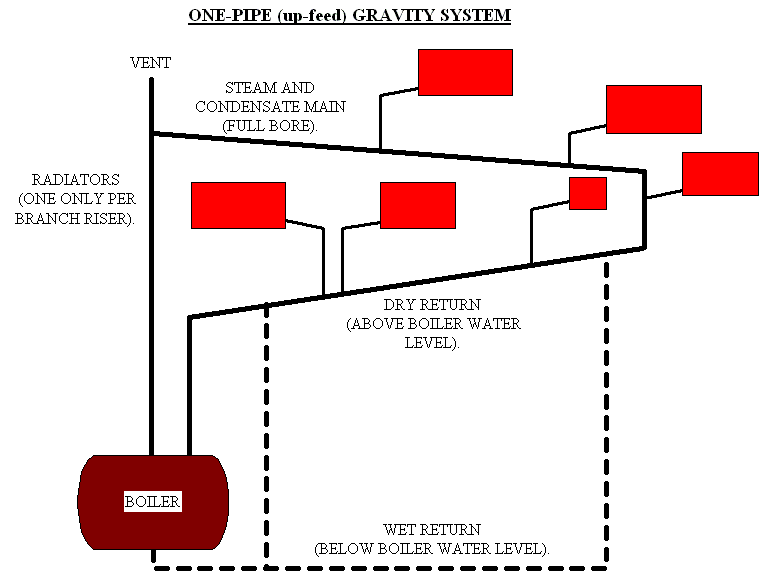
Steam Heating systems
They just put in these two-pipe, air-vent systems, which look remarkably like two-pipe, direct-return hot-water systems. The steam leaves the boiler and heads up into the building. It favors the supply lines, of course, because these are usually larger than the return lines by at least one size. Steam follows the path of least resistance.

1939 RICHMOND, VA., PLUS FLOOD LINES OF THE 1771 'FRESHETTE'
Steam Coil Vacuum Breaker Airflow Condensate Return Main Trap 12" Min. 2 4 Air Vent 3 5 Condensate Return Safety Drain Vacuum Breaker 6 12" Min. 1 7 7 12" Min. C-14 Recommended Piping Practices for Steam Heating Coils 1. 24" minimum if safety drain is used. 2. Safety drain is used if steam supply is modulated and the condensate system is ...
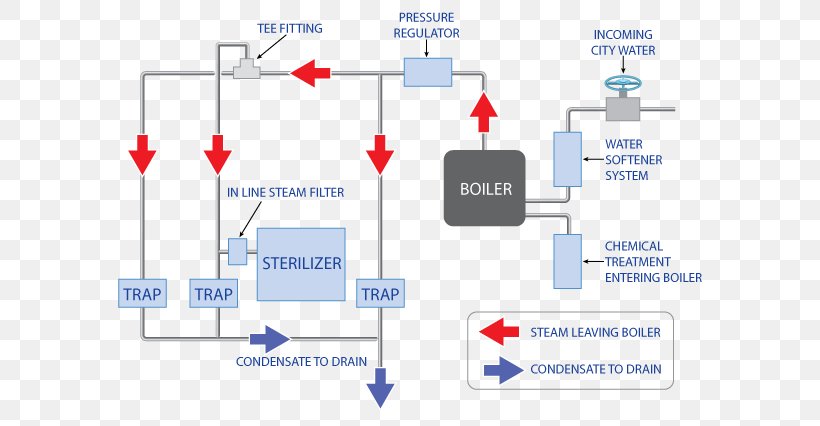
Dandang Piping And Instrumentation Diagram Steam Generator ...
Figure 2 illustrates the steps in a boiler firing cycle without main line valves. At the beginning of a boiler firing cycle, the piping system and radiators are filled with air, which appears white in diagram A. Diagram B illustrates the system as steam heats the large mass of piping and pushes air out of the line toward the radiators.
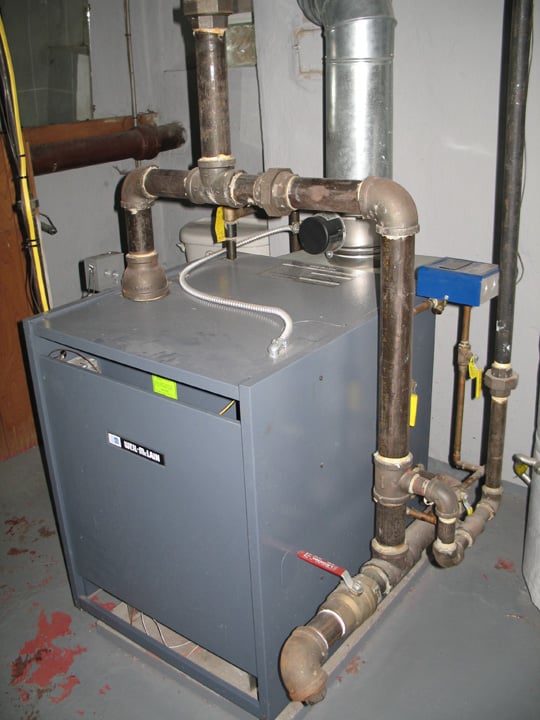
Noisy one pipe steam system in Pittsburgh — Heating Help ...
a) The lowest steam carrying pipe must be at least 28 inches above the normal boiler water line. B. SYSTEM CHECKLIST 1. The system piping must provide dry steam—wet steam causes water hammer, component damage and water level problems. 2. Make sure air vents are working. a) The most important vents are the main and riser vents.

Screen Shot 2021-03-18 at 2.25.30 PM
Installation and maintenance of the steam system are important issues, and must be considered at the design stage. Figure 3.2 Steam Distribution System As steam condenses in a process, flow is induced in the supply pipe. Condensate has a very small volume compared to the steam, and this causes a pressure drop, which causes the steam

Steam Boiler Room Piping Diagram - School Cool Electrical
Read an introduction to two-pipe steam systems here. One-pipe steam radiator components. The inlet, or control, valve must have a large internal bore: minimum of 1" for radiators of 5000 BTUs or fewer; at least 1-¼" above that. On a one-pipe steam radiator it must be fully open or fully closed.

1865 SOUTHEASTERN RICHMOND, ROCKETTS & OAKLAND
Piping and main vent location diagram for a counterflow steam system. ... 2-Pipe Air Vent Steam System. 2-Pipe Vapor Vacuum Steam System. 2-Pipe Vacuum Steam System. 2-Pipe Pumped Return Steam System. DIY New Boiler Worksheet Request. More. Steam Heat Counterflow System ...

Multiple Boiler Install
NuScale Power Module has its own steam and po wer conversion system. The steam and power conversion system has no safety-related function. The steam and power conversion system includes the pipe, fittings, valves, and instruments from (and including) the removable pipe spools at the containment system main steam

Image from page 429 of "The American florist : a weekly journal for the trade" (1885)
steam in the system condenses. This allows all the vents and vacuum breakers to re-open and let the air back into the system. (This includes the radiators and the piping.) This one detail is critical for the system to operate properly. When the boiler fires back up for the next heating cycle, the steam will push the air out of

Clear plastic tubing: Steam condensate pump piping diagram
In this excerpt from his Dead Men's Steam School seminar, Dan Holohan looks at all of the different types of piping that you will find on steam heating syste...

The Two-Pipe System. Part 4
1. Piping systems designed for steam pressure below 25 psig are low-pressure steam systems. Piping systems designed for steam pressures from 25 psig up to and including 125 psig are medium-pressure steam. Systems 126 psig and above are high-pressure steam. 2. Distribution piping complying with Thermal Energy Cooperative (TECO) requirements is

Two pipe system some cold Radiators — Heating Help: The Wall
THE SYSTEM. • PIPING SHOULD CONFORM TO LOCAL CODES. • BALL VALVES ARE SHOWN FOR SERVICING. HOWEVER LOCAL CODES SHALL GOVERN THEIR USAGE. • PIPE RELIEF VALVE TO OPEN DRAIN Model LB Recommended Flow Rate @ 20°(F)Temp. Rise Boiler Inlet & Outlet Flow (inches) (gpm) Head Loss (feet) 5400 469". 2 7650 601"0. 2 18000 868". 2 System Notes:

A simplified diagram of steam generation process. Aimed to ...
This is a steam system so there should be no water in the radiator when the boilers off. He takes the cover off and gets douched by five or six gallons of water. And of course the room will have white carpet and be on the second floor so that the water can destroy the ceiling on the first floor as it pours thru the hole the pipe uses.

Vacuum Pumps | Heater Service & Troubleshooting
Steam is a vapor, so there is no need to bleed air and no need for an expansion tank on a basic steam system. However, the piping pitch is much more crucial to this system. The piping must have pitch or fall to help the steam rise, and more importantly, to allow the condensate to flow back to the boiler.

Boiler Struggles | Twinsprings Research Institute
Single Pipe Steam System with Main Pipes Pitched Towards the Boiler. Steam and condensate use the same main pipes. The condensate flows in the opposite direction of the steam. Air valves are necessary for evacuating air during start-up. The system is simple but the heat emission from radiators or in heat exchangers is hard to control.

1894 U.S.C.&G.S. MAP, RICHMOND, VIRGINIA
A general rule of thumb is that 1 psi of steam will raise water about 2 feet. For example, a 5 psi system should not have condensate lines higher than 10 feet above the steam trap. Properly Size Steam Trap Drip Leg Lines. Not only must steam traps be piped off the bottom of the steam lines, the pipe must be properly sized.

The Two-Pipe System of Steam

you will go with one-pipe monoflo setting or two-pipe ...
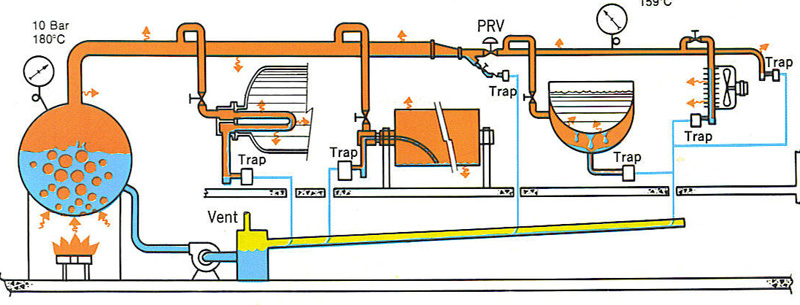
Boiler System: February 2017
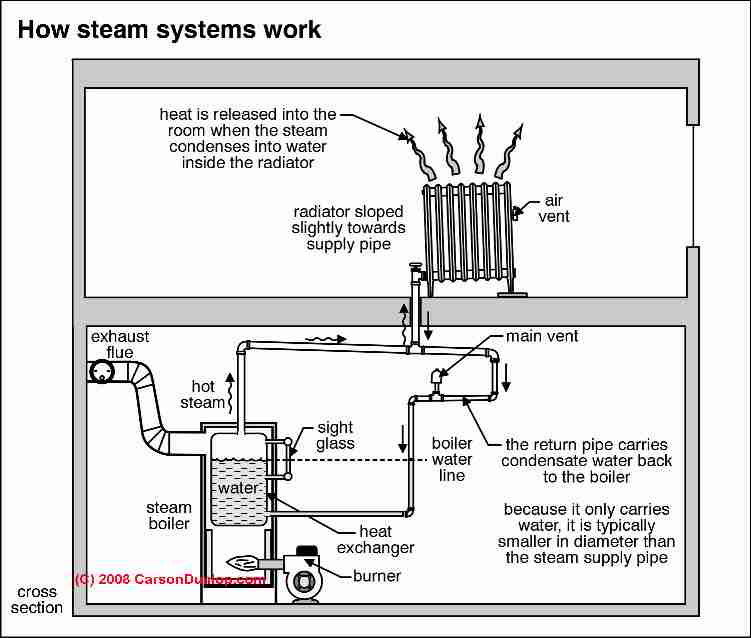
Steam Boiler: Steam Boiler Piping Diagram
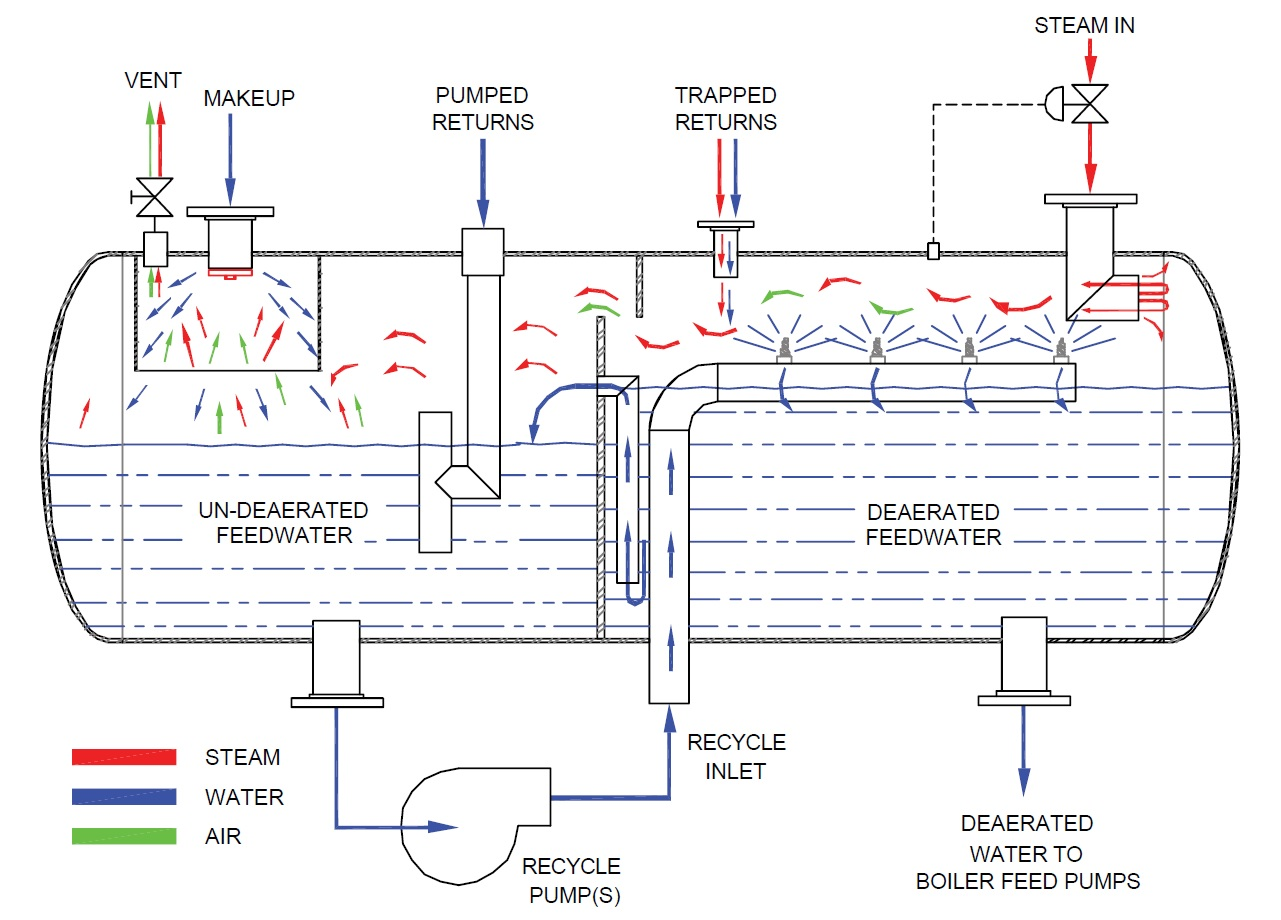
Industrial Steam Steam Flow - Goes Heating System

Steam Boiler Piping - Steam Boiler Indonesian

Class 108 No. L231 stabled at Cranmore, East Somerset Railway.
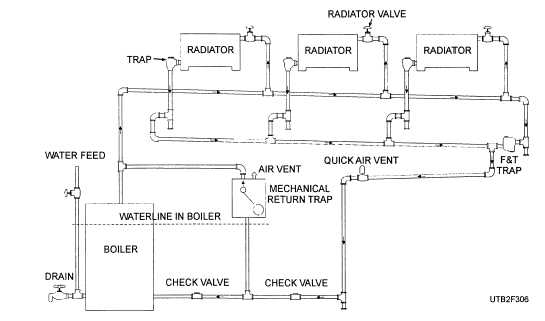
Figure 3-6.A two-pipe vapor system with a return trap

Screen Shot 2021-03-18 at 2.11.28 PM

Steam Boiler: Burnham Steam Boiler Piping Diagram

HVAC Steam Heating Systems | Old House Web

Spirax-Sarco FT-75 - 1-1/2" CI F&T Trap
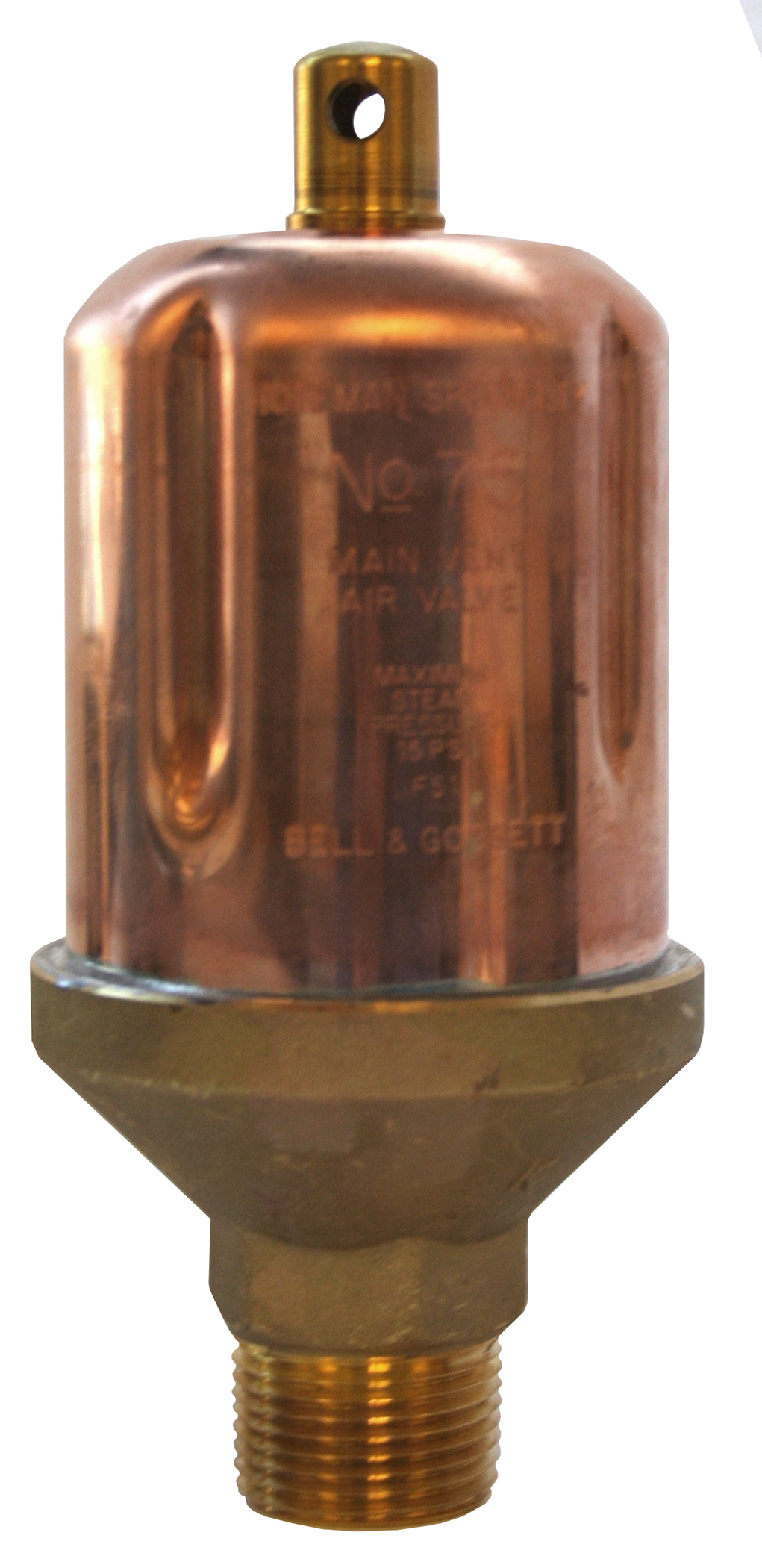
Do's and don'ts for one-pipe steam systems - Xylem Applied ...
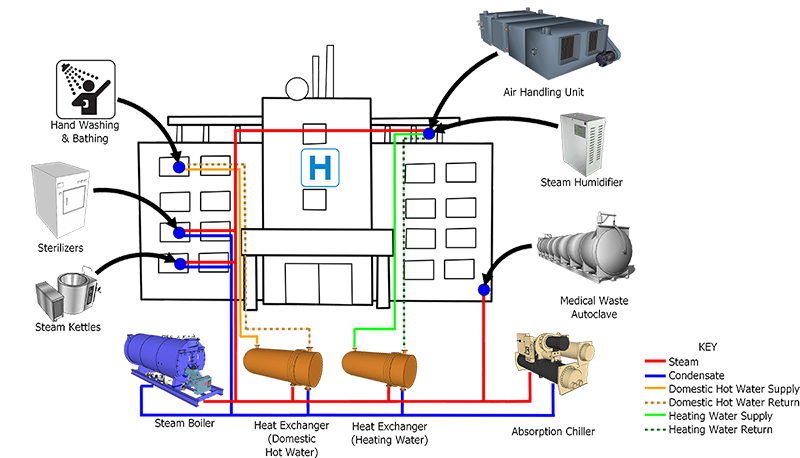
Steam: Lifeblood of a Hospital | EDT Forensic Engineering ...
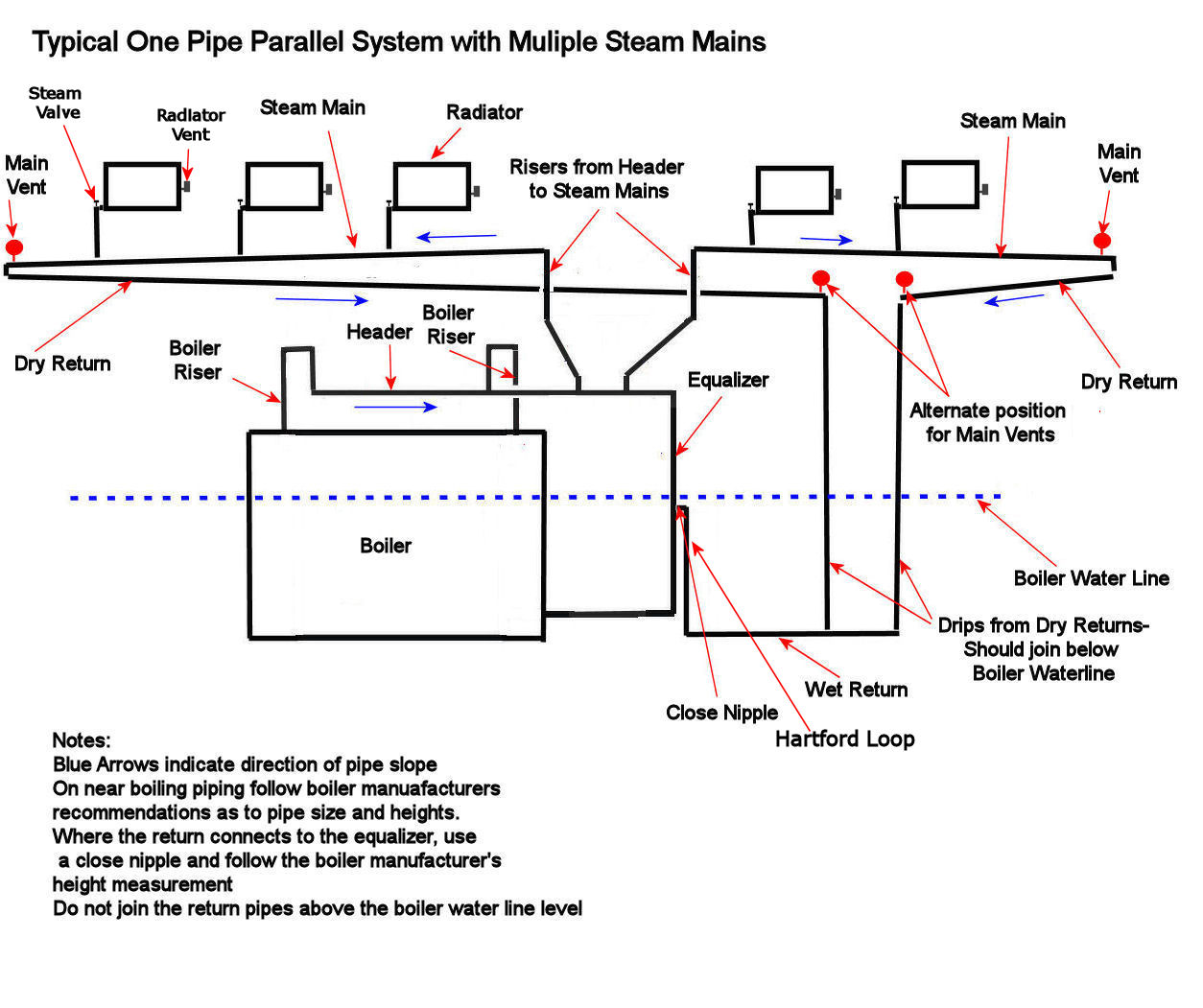
Piping a two pipe Boiler — Heating Help: The Wall
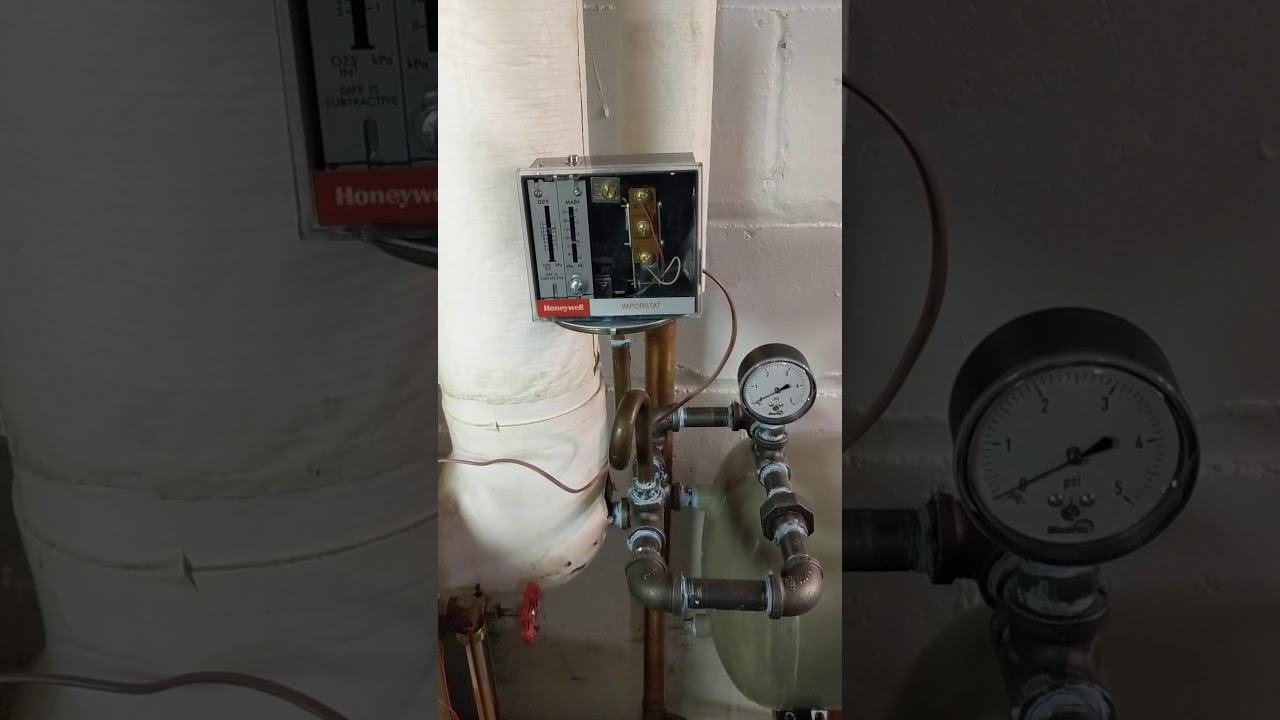
One Pipe Steam Boiler Tips Part 2 - YouTube

Separators and their Role in the Steam System | TLV - A ...

Screen Shot 2021-03-18 at 2.22.18 PM

Screen Shot 2021-03-18 at 2.26.09 PM

Two-Pipe System

Diagram Of A Steam Boiler System - School Cool Electrical
Comments
Post a Comment